
3rd SCHOOL: Gravitational Waves in Astrophysics
January 19-23, 2026
Campus Casona, UNAB, Santiago
Scientific Organizing Committee
- Celeste Artale (Universidad Andrés Bello)
- Macarena Lagos (Universidad Andrés Bello)
- Franz Bauer (Universidad de Tarapacá)
- Alessandro Trani (Universidad de Concepción)
- Jorge Cuadra (Universidad Adolfo Ibáñez)
- Hanne Van Den Bosch (Universidad de Chile)
School Rationale
This school will introduce participants to recent developments in gravitational-wave and high-energy astrophysics. This is the third edition of “Gravitational Waves in Astrophysics schools” in Chile.
In 2026, the program will include three main lectures by international experts:
- Binary Black Holes in Active Galactic Nuclei (AGNs) by Zoltan Haiman: The influence of gas-rich environments on the formation and evolution of binary black holes.
- Quasi-Periodic Eruptions (QPEs) and Tidal Disruption Events (TDEs) by Andreja Gomboc: Transient phenomena that shed light on accretion physics and stellar interactions with massive black holes.
- Extreme Mass Ratio Inspirals (EMRIs) by Christian Chapman-Bird: Compact objects orbiting and merging with supermassive black holes, key sources for future space-based detectors.
Through these topics, the school aims to provide a broad overview of compact object astrophysics and its connections to multi-messenger observations. Note that all lectures will be given in English.
Invited Lecturers
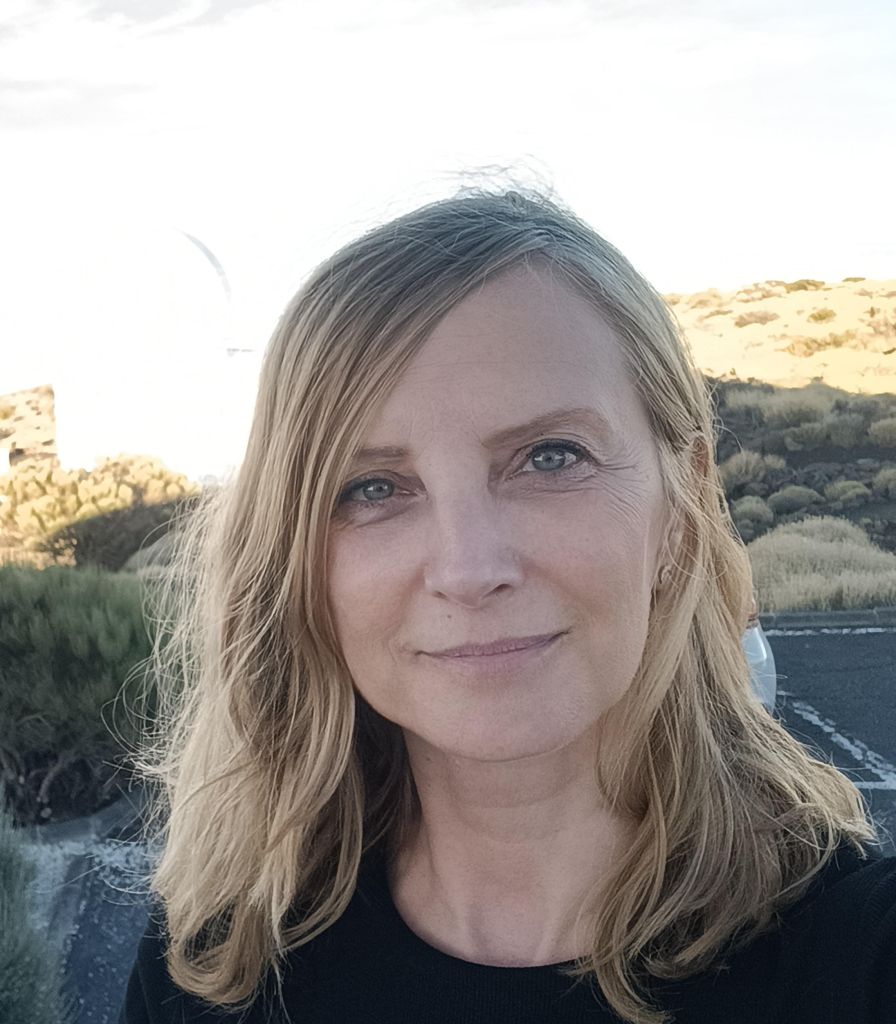
Andreja Gomboc (University of Nova Gorica, Slovenia)
Andreja Gomboc is Professor of Astronomy at the University of Nova Gorica, where she is leading Slovenian participation in the Vera Rubin Observatory’s Legacy Survey of Space and Time. Following her PhD in physics at the University of Ljubljana, she was a Marie Skłodowska Curie fellow at the Liverpool John Moores University, UK, and, later,a Fulbright Scholar at the University of Washington, USA. Her main field of research is astrophysical transients, in particular tidal disruptions of stars in the vicinity of massive black holes and gamma-ray bursts.
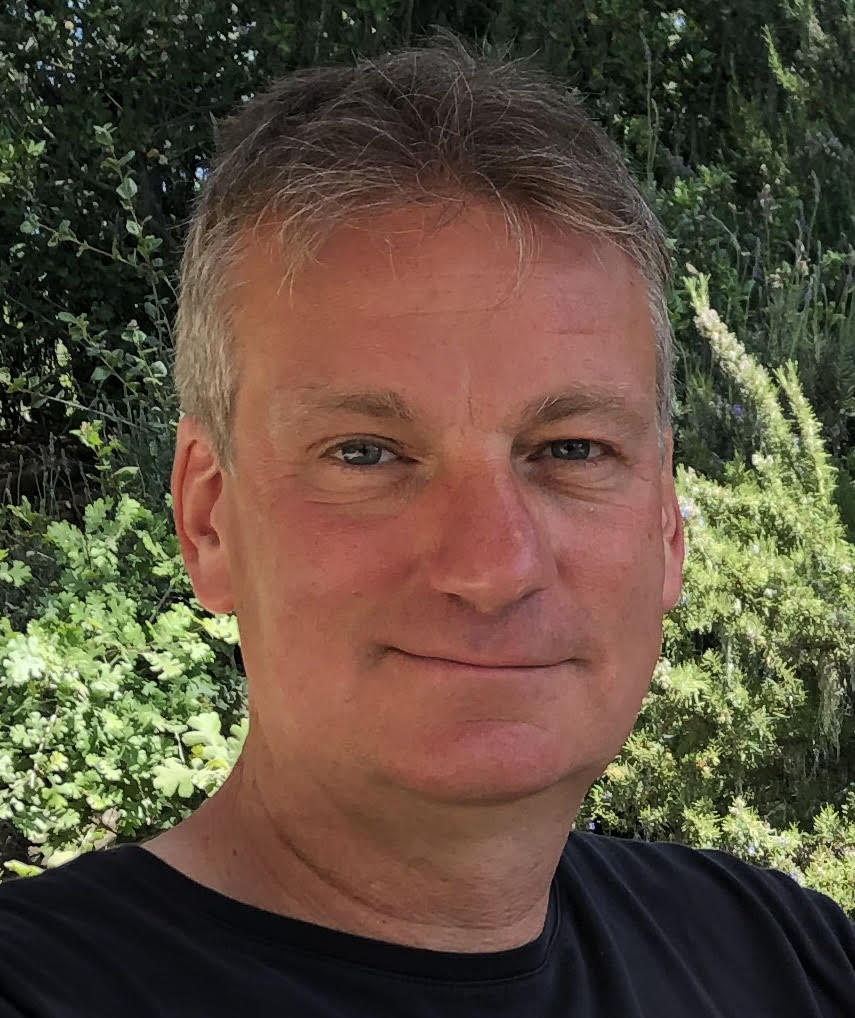
Zoltan Haiman (Institute of Science and Technology, Austria)
Professor Zoltan Haiman received a B.S. degree in Physics from MIT and attended graduate school in Cambridge, UK, and at Harvard University, where he earned a Ph.D. in Astronomy in 1998. He was a Hubble Fellow at Princeton University and a postdoc in the Theoretical Astrophysics group at Fermilab, before joining the faculty at Columbia University. Since 2025, he has been on leave from Columbia and holds a group leader position at the Institute of Science and Technology Austria (ISTA). Professor Haiman’s research has explored broad topics in theoretical astrophysics and cosmology, including the formation of the first stars, the emergence of massive black holes, the nature of dark energy and dark matter, as well as astrophysical sources of gravitational waves. He was chosen as one of Popular Science Magazine’s Brilliant 10 young scientists in 2002 and received the New York Academy of Sciences Blavatnik Award in 2010, as well as a Simons Fellowship in Theoretical Physics in 2016. Since 2025, he has been serving as one of the 20 members of the LISA Science Team, appointed by the European Space Agency.

Christian Chapman-Bird (University of Birmingham , UK)
Christian Chapman-Bird is a postdoctoral research fellow at the University of Birmingham’s Institute for Gravitational-Wave Astronomy, which he joined after completing his PhD at the University of Glasgow in 2024. His work contributes to the the development of waveform modelling and data-analysis techniques for the Laser Interferometer Space Antenna (LISA), a European Space Agency flagship mission set for launch in a decade’s time that will observe millihertz gravitational waves from across the Universe. His research has particular focus on the modelling of asymmetric-mass binary systems, such as extreme-mass-ratio inspirals, which pose a significant challenge in both their modelling and subsequent analysis in LISA data.
Programme
The program will include a poster session, providing students with the opportunity to present and discuss their research results with peers and lecturers. There will also be a public colloquium (in Spanish) for general audience.
Registration: participants can register and collect their identification badges in the main lecture room from 9:00-9:30am on Monday 19th.
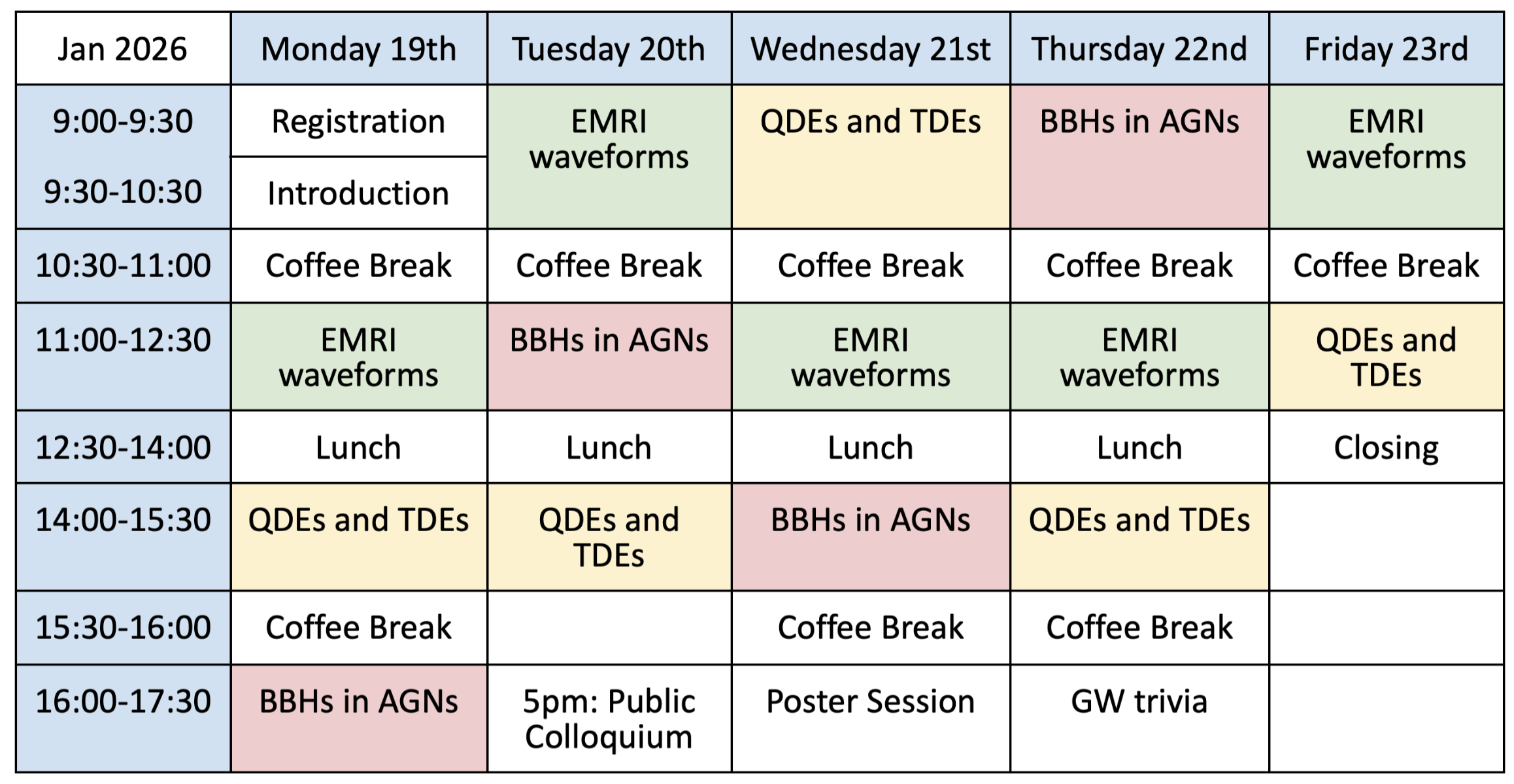
This is a tentative schedule, subject to changes.
Extracurricular Activity: Visit to Observatory Cerro Calán, University of Chile.
Participants are invited to join a guided tour at Observatory Cerro Calán, where historic telescopes will be visited, and a short observation of the night sky will be held (weather permitting).
The tour will be on Wednesday 21st starting at 8:00pm. Each participant must arrive on their own, using public transportation or taxis. See the exact location of the observatory here: https://maps.app.goo.gl/qdw51yQ8XryhWYyh8
Cerro Calán offers a walking path for pedestrians with panoramic views of Santiago, which can be explored independently before or after the tour.
There is limited space for the tour, so participants are required to fill in this form to sign up: https://forms.gle/XUnhb4CRJU3tTkQRA
Public Colloquium
Title: Ondas gravitacionales: una nueva forma de explorar el cosmos
Abstract: Las ondas gravitacionales son pequeñas vibraciones del espacio-tiempo que transportan información sobre los eventos más violentos del Universo. Su detección ha abierto una nueva forma de explorar el cosmos, permitiéndonos estudiar fenómenos invisibles para la luz. En esta charla exploraremos su origen, el desafío de su detección y cómo hoy están transformando nuestra manera de observar y comprender el cosmos. También veremos cómo estas observaciones se complementan con la astronomía tradicional, dando lugar a una visión más completa del Universo.
Date: Tuesday 20th, January 2026, at 5pm in Auditorio Aznar, Campus Casona, UNAB.
Note: This colloquium will be held in spanish

Celeste Artale (Universidad Andrés Bello)
Assistant professor at the Institute of Astrophysics at Universidad Andrés Bello, with a PhD from the National University of Buenos Aires. She is part of the Einstein Telescope collaboration and her research interests include simulations of formation and evolution of binary black holes and neutron stars.
Practical Information
From the airport to the city: from the Santiago SCL airport you can get to the city using a taxi (costs about CLP 30,000), shared transfer (costs about CLP 10,000), or public buses number 555 or 444 (cost about CLP 1,000). For taxis or shared transfer we recommend to use TransVip (https://web.transvip.cl).
From the city to the university: You can take various public buses (e.g. C01, 411, etc) which stop a few blocks from the university campus. We recommend to use google maps to find the best route from your specific location. Note that, in Santiago, public transportation can only be paid with a BIP card, which can be bought and loaded at the airport (recommended), at any subway station, or some grocery stores.
UNIVERSITY CAMPUS MAP

Getting to the lecture room: The pedestrian entrance is located in the street Camino La Posada. If you follow the pedestrian path you will reach the guarded entrance. The lecture room will be in Auditorium 304, located on the 3rd floor of the C1 building.
Lunch options: the university campus has coffee shops on the 4th floor of the C1 building and in the PC outdoor area. You can find lunch dishes, burgers, pizzas, empanadas, etc.
Registration – Closed
(deadline: December 1st)
For registration, please fill out this form: https://forms.gle/XuCC3XwAnvqR737A7
Participation in the school is free of charge, with no registration or tuition fees. If you have questions about the school, feel free to send an email to: macarena.lagos.u@unab.cl and maria.artale@unab.cl
The event is supported by the Institute of Astrophysics at Universidad Andrés Bello, and the ANID Fondecyt Iniciación projects 11240540 and 11250105.
Upcoming: 4th school of Gravitational Waves in Astrophysics
The next Gravitational Waves school in Chile is being planned, so please stay tuned for more updates to come.
Where: La Serena, Chile
When: January 11 to 15, 2027
Topics: Gravitational waves data analysis, Electromagnetic counterparts of binary neutron stars, simulations of stellar evolution, and strong gravity physics.
Address:
Universidad Andres Bello,
Fernández Concha 700,
Las Condes, Santiago, RM
Chile
 astrounab.cl